
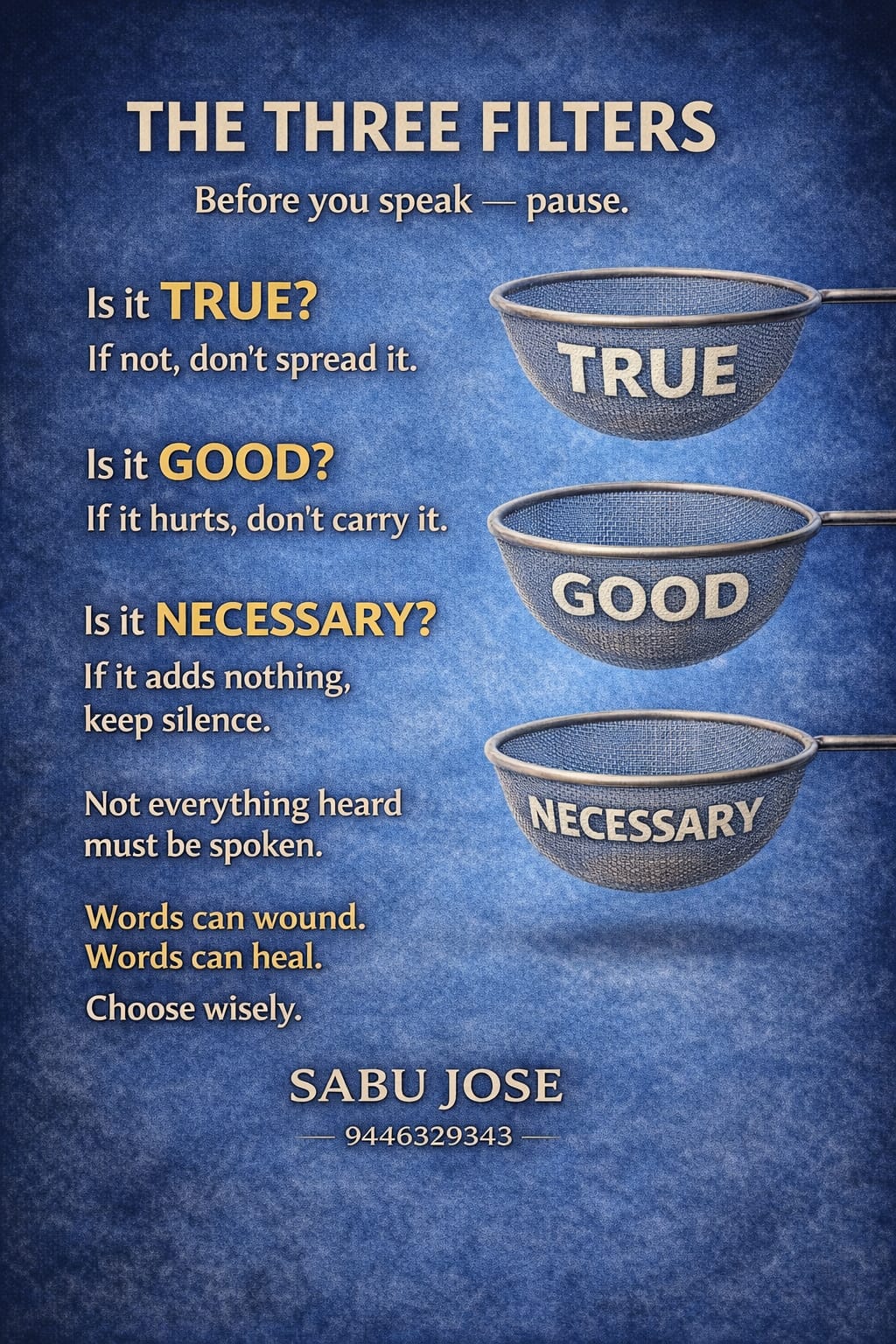
The Three Filters —
A Lesson from the Church Courtyard

പള്ളിപ്പെരുന്നാളിന്റെ തിരക്കുകൾ അവസാനിച്ചു.
പള്ളിമുറ്റത്ത് ശാന്തത വീണിരുന്നു.
അക്കൗണ്ട് പുസ്തകങ്ങളും രസീതുകളും മുന്നിൽ വിരിച്ച് അച്ചൻ കണക്കുകൾ പരിശോധിച്ചു കൊണ്ടിരുന്നു.
അപ്പോഴാണ് കപ്യാർ പാപ്പച്ചൻ ഒന്നു പാഞ്ഞെത്തിയത്.
“അച്ചാ… ഒരു കാര്യം പറയാനുണ്ട്. നമ്മുടെ പള്ളി കമ്മിറ്റിയിലെ തോമസുണ്ടല്ലോ… അയാൾ അച്ചനെക്കുറിച്ച് ഇത്തിരി മോശമായി ചിലത് പറയുന്നത് ഞാൻ കേട്ടു.”
അച്ചൻ പതുക്കെ കണ്ണട മാറ്റിവെച്ച് പാപ്പച്ചനെ നോക്കി ഒന്ന് ചിരിച്ചു.
“പാപ്പച്ചാ… നീ അത് പറയുന്നതിന് മുമ്പ് നമുക്ക് ആ കാര്യത്തെ മൂന്ന് അരിപ്പകളിൽ ഒന്ന് അരിച്ചെടുക്കാമോ?”
പാപ്പച്ചൻ ആശ്ചര്യപ്പെട്ടു.
“അരിപ്പയോ? എന്താ അച്ചാ അതു?”
അച്ചൻ പുസ്തകം അടച്ച് തുടങ്ങി.
ഒന്നാമത്തെ അരിപ്പ — സത്യത്തിന്റെ അരിപ്പ
“നീ പറയാൻ പോകുന്ന കാര്യങ്ങൾ നൂറ് ശതമാനം സത്യമാണെന്ന് നിനക്ക് ഉറപ്പുണ്ടോ?
നീ നേരിട്ട് കേട്ടതാണോ?”
പാപ്പച്ചൻ പതറി.
“അല്ല അച്ചാ… ചായക്കടയിൽ ആരോ പറയുന്നത് കേട്ടതാ…”
“അപ്പോൾ സത്യമാണോ എന്ന് ഉറപ്പില്ല.”
രണ്ടാമത്തെ അരിപ്പ — നന്മയുടെ അരിപ്പ
“അത് നല്ല കാര്യമാണോ?
ഞാൻ കേട്ടാൽ എനിക്ക് സന്തോഷമുണ്ടാകുമോ?”
“അയ്യോ ഇല്ല അച്ചാ… അത് അച്ചനെ കുറ്റപ്പെടുത്തി പറഞ്ഞതാണ്.”
“ശരി… സത്യമല്ലാത്തതും നല്ലതുമല്ലാത്തതുമായ കാര്യമാണ് നീ പറയാൻ പോകുന്നത്.”
മൂന്നാമത്തെ അരിപ്പ — ആവശ്യകതയുടെ അരിപ്പ
“അപ്പോൾ ഇത് ഞാൻ അറിയേണ്ട നിർബന്ധമുണ്ടോ?
ഇത് പള്ളിക്കോ എനിക്കോ ഉപകാരമുണ്ടാക്കുമോ?”
പാപ്പച്ചൻ തലകുനിച്ചു.
“ഇല്ല അച്ചാ… പ്രത്യേകിച്ച് ഒരു ഉപകാരവുമില്ല.”
അച്ചൻ വീണ്ടും കണ്ണട ധരിച്ചു.
“പാപ്പച്ചാ…
സത്യമല്ലാത്തത്, നല്ലതല്ലാത്തത്, ആവശ്യമില്ലാത്തത് —
അത് പറഞ്ഞ് സമയം കളയേണ്ടതുണ്ടോ?”
പാപ്പച്ചൻ നിശ്ശബ്ദനായി.
പള്ളിമുറ്റത്ത് വീണ്ടും ശാന്തത പടർന്നു.
പാഠം — കേട്ടത് എല്ലാം പറയരുത്
ഇന്നത്തെ ലോകത്ത് വാർത്തകൾ വേഗത്തിൽ സഞ്ചരിക്കുന്നു;
പക്ഷേ സത്യം അത്ര വേഗത്തിൽ എത്താറില്ല.
പല ബന്ധങ്ങളും തകരുന്നത് വലിയ കുറ്റങ്ങളാൽ അല്ല —
ചെറിയ വാക്കുകളാലാണ്.
പറഞ്ഞ വാക്ക് തിരിച്ചു വരില്ല.
അതുകൊണ്ട് സംസാരിക്കുന്നതിന് മുൻപ് ചിന്തിക്കുക.

പറയുമ്പോൾ ശ്രദ്ധിക്കേണ്ട 10 കാര്യങ്ങൾ
- സത്യമാണോ? — ഉറപ്പില്ലെങ്കിൽ മൗനം നല്ലത്
- ഉറവിടം വിശ്വസനീയമാണോ? — “ആരോ പറഞ്ഞു” മതിയല്ല
- അത് പറയേണ്ട ആളാണോ? — എല്ലാവർക്കും എല്ലാം പറയേണ്ടതില്ല
- സമയോചിതമാണോ? — ശരിയായ സമയം ഇല്ലെങ്കിൽ വാക്ക് തെറ്റാകും
- നന്മ ഉണ്ടാക്കുമോ? — വേദന മാത്രം ഉണ്ടാക്കുന്ന വാക്ക് ഒഴിവാക്കുക
- ആവശ്യകതയുണ്ടോ? — ഉപകാരമില്ലെങ്കിൽ പറഞ്ഞിട്ട് കാര്യമില്ല
- ഭാഷ ശരിയാണോ? — സത്യം പോലും കടുപ്പത്തിൽ പറഞ്ഞാൽ മുറിവാകും
- സ്വകാര്യത മാനിക്കുന്നുണ്ടോ? — മറ്റൊരാളുടെ മാനമര്യാദ കാത്തുസൂക്ഷിക്കുക
- ഉദ്ദേശ്യം ശുദ്ധമാണോ? — തിരുത്താനാണോ? ഇല്ലെങ്കിൽ പരത്താനോ?
- പറഞ്ഞാൽ ഞാൻ സമാധാനത്തിലാവുമോ? — മനസ്സാക്ഷി ചോദിക്കുക
പ്രമുഖർ പറഞ്ഞത്
“നമ്മൾ പറയുന്നതിനു മുമ്പ് വാക്കുകളുടെ അടിമകൾ; പറഞ്ഞശേഷം വാക്കുകൾ നമ്മുടെ യജമാനന്മാർ.”
“മൗനം പല പ്രശ്നങ്ങൾക്കും മറുപടിയാണ്.”
“സത്യം പറയുക, പക്ഷേ സ്നേഹത്തോടെ പറയുക.”
“ചിന്തിക്കാതെ സംസാരിക്കുന്നത് ലക്ഷ്യം ഇല്ലാതെ വെടിവെക്കുന്നതുപോലെയാണ്.”
“ഒരു നല്ല വാക്ക് മൂന്ന് മാസത്തെ ശീതകാലത്തും ഹൃദയം ചൂടാക്കും.”
സമാപനം
വാക്കുകൾ ചെറുതാണ് — ഫലം വലുതാണ്.
ബന്ധം തകർക്കാനും പണിയാനും വാക്കുകൾക്ക് കഴിയും.
ചിന്തിച്ച് പറയുന്ന വാക്ക് ബന്ധം രക്ഷിക്കും
ചിന്തിക്കാതെ പറയുന്ന വാക്ക് ബന്ധം നശിപ്പിക്കും
മൂന്ന് അരിപ്പകൾ കടന്ന വാക്കുകൾ മാത്രമേ
നമ്മിൽ നിന്ന് പുറപ്പെടേണ്ടതുള്ളു.
✍️ സാബു ജോസ് , എറണാകുളം.
9446329343.
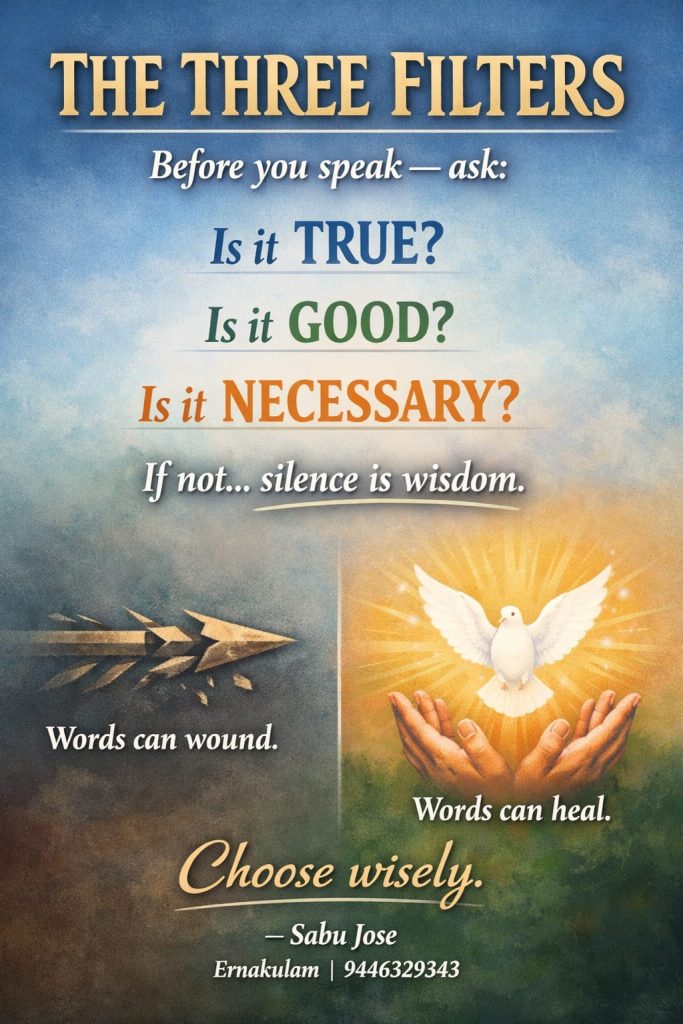
The Three Filters —
A Lesson from the Church Courtyard
The parish feast had ended.
Silence slowly settled over the church courtyard.
The priest sat reviewing the accounts, with books and receipts spread before him.
Just then, the sacristan Pappachan hurried in.
“Father… I have something to tell you. You know Thomas from the parish committee… I heard him speaking badly about you.”
The priest gently removed his glasses and smiled.
“Pappachan… before you tell me, shall we pass this through three filters?”
“Filters? What do you mean, Father?” he asked in surprise.
The priest closed the ledger and began.
First Filter — Truth
“Are you completely sure what you are about to tell me is true?
Did you hear it directly?”
Pappachan hesitated.
“No, Father… I only heard someone say it at the tea shop…”
“So, you are not certain it is true.”
Second Filter — Goodness
“Is it something good?
Will hearing it bring me joy?”
“Oh no, Father… it was criticism against you.”
“So it is neither true nor good.”
Third Filter — Necessity
“Is it necessary for me to know?
Will it help me or the parish in any way?”
Pappachan lowered his head.
“No, Father… it will not really help.”
The priest put on his glasses again.
“Then why waste time with something
that is not true, not good, and not necessary?”
Pappachan remained silent.
Peace returned to the courtyard.
The Lesson — Do Not Repeat Everything You Hear
In today’s world, news travels fast,
but truth travels slowly.
Most relationships are not destroyed by great crimes,
but by careless words.
A spoken word never returns.
So think before you speak.
Ten Things to Check Before Speaking
- Is it true? — If unsure, silence is better
- Is the source reliable? — “Someone said” is not enough
- Is this the right person to tell? — Not everything is for everyone
- Is the timing right? — Even truth fails at the wrong time
- Will it do good? — Avoid words that only hurt
- Is it necessary? — No benefit, no need
- Is the language gentle? — Truth spoken harshly becomes a wound
- Does it respect privacy? — Protect dignity
- Is the intention pure? — To correct or to spread?
- Will I feel peaceful after saying it? — Ask your conscience
Words of Wisdom
“We are masters of our words before speaking,
and servants of them afterward.”
“Silence answers many problems.”
“Speak the truth, but speak it with love.”
“To speak without thinking is to shoot without aiming.”
“A kind word can warm three winter months.”
Conclusion
Words are small — their impact is great.
They can break relationships or build them.
Thoughtful words protect relationships.
Careless words destroy them.
Let only those words leave your lips
that pass the three filters.
✍️ Sabu Jose,
Ernakulam
9446329343
sabujosecochin@gmail.com
Tre Filtri —
Una lezione dal cortile della chiesa**
La festa parrocchiale era terminata.
Il silenzio scese lentamente nel cortile della chiesa.
Il sacerdote stava esaminando i conti, con libri e ricevute davanti a sé.
Proprio allora il sacrestano Pappachan arrivò di corsa.
«Padre… devo dirle una cosa. Conosce Thomas del comitato parrocchiale… l’ho sentito parlare male di lei.»
Il sacerdote tolse con calma gli occhiali e sorrise.
«Pappachan… prima di dirmelo, vogliamo far passare questa cosa attraverso tre filtri?»
«Filtri? Cosa intende, Padre?» chiese sorpreso.
Il sacerdote chiuse il registro e iniziò.
Primo filtro — Verità
«Sei assolutamente sicuro che ciò che stai per dirmi sia vero?
Lo hai sentito direttamente?»
Pappachan esitò.
«No, Padre… ho solo sentito qualcuno dirlo alla sala da tè…»
«Allora non sei certo che sia vero.»
Secondo filtro — Bontà
«È qualcosa di buono?
Sentirlo mi renderà felice?»
«Oh no, Padre… era una critica contro di lei.»
«Quindi non è né vero né buono.»
Terzo filtro — Necessità
«È necessario che io lo sappia?
Aiuterà me o la parrocchia in qualche modo?»
Pappachan abbassò la testa.
«No, Padre… non aiuterà davvero.»
Il sacerdote rimise gli occhiali.
«Allora perché perdere tempo con qualcosa
che non è vero, non è buono e non è necessario?»
Pappachan rimase in silenzio.
La pace tornò nel cortile.
La lezione — Non ripetere tutto ciò che senti
Nel mondo di oggi le notizie viaggiano veloci,
ma la verità arriva lentamente.
La maggior parte delle relazioni non viene distrutta da grandi colpe,
ma da parole imprudenti.
Una parola detta non ritorna mai.
Perciò pensa prima di parlare.
Dieci cose da verificare prima di parlare
- È vero? — Se non sei sicuro, il silenzio è meglio
- La fonte è affidabile? — “Qualcuno ha detto” non basta
- È la persona giusta a cui dirlo? — Non tutto è per tutti
- È il momento giusto? — Anche la verità fallisce nel momento sbagliato
- Porterà del bene? — Evita parole che feriscono soltanto
- È necessario? — Nessun beneficio, nessuna necessità
- Il linguaggio è gentile? — La verità dura diventa ferita
- Rispetta la privacy? — Proteggi la dignità
- L’intenzione è pura? — Correggere o diffondere?
- Mi sentirò in pace dopo averlo detto? — Ascolta la coscienza
Parole di saggezza
«Siamo padroni delle parole prima di parlarle
e servi dopo averle dette.»
«Il silenzio risolve molti problemi.»
«Di’ la verità, ma dilla con amore.»
«Parlare senza pensare è sparare senza mirare.»
«Una parola gentile può scaldare tre mesi d’inverno.»
Conclusione
Le parole sono piccole — ma il loro effetto è grande.
Possono distruggere o costruire relazioni.
Le parole pensate proteggono i rapporti.
Le parole impulsive li rovinano.
Lascia uscire dalle tue labbra
solo parole che superano i tre filtri.
✍️ Sabu Jose
Ernakulam
9446329343
sabujosecochin@gmail.com